Home › Industrial and Heavy-Duty Asphalt Paving
Precision Asphalt Austin delivers industrial asphalt paving in Austin, TX for truck yards, loading docks, and high traffic service areas. We engineer thicker sections, strong bases, and proper reinforcement to support heavy loads and frequent turning. Our heavy duty asphalt surfaces help prevent rutting and failures in demanding environments.
Precision Asphalt Austin provides professional industrial asphalt paving throughout Austin, TX, Texas and the surrounding area. Our licensed, insured crew delivers safe, clean, on-time work with a free estimate before anything begins. Call (737) 530-7711 or request your free quote.
Industrial Asphalt Paving for High-Traffic Facilities in Austin
Precision Asphalt Austin specializes in industrial asphalt paving for sites that carry real weight and constant traffic. We design and build pavement structures for distribution centers, trucking yards, warehouses, manufacturing plants, bulk material facilities, and large commercial parking lots throughout Austin and the surrounding Central Texas region.
Industrial asphalt paving is different from a standard driveway or retail parking lot. We engineer the entire section from subgrade to surface to carry loaded 18 wheelers, forklifts, container stacks, and continuous turning movements without rutting or shoving. In Austin, that means planning for extreme summer heat, occasional hard storms, and clay subsoils that can move if they are not prepared correctly.
From the first site visit, our team focuses on how your pavement will actually be used. We look at truck routes, dock locations, turning radii, drainage patterns, and any existing failures in your current pavement. Then we build a design that fits your operations and budget while targeting a realistic service life, usually 15 to 25 years with proper maintenance for heavy duty facilities.
How We Design Heavy-Duty Asphalt Sections
Durable industrial asphalt starts with structural design. Precision Asphalt Austin begins by evaluating your soil conditions with test pits or geotechnical data when available. Many Austin industrial sites along Highway 71, US 290, and I 35 sit on expansive clay, so we adjust the section thickness and base type to control movement.
A typical heavy duty section might include 6 to 8 inches of flexible base or cement treated base, 3 to 4 inches of asphalt binder course, and 2 to 3 inches of surface mix. In truck lanes or loading areas where trailers are parked for long periods, we often increase total thickness or recommend a stiffer base to resist rutting.
We also separate your site into zones. Car parking, fire lanes, and light traffic areas can use a slightly lighter section, while drive aisles, trash enclosure pads, and dock approaches get a heavy duty design. This zoning approach manages cost without sacrificing performance where it matters most.
Drainage is part of design too. Industrial pavements in Austin fail early when water stands on the surface or sits in the base. We establish consistent slopes toward inlets, size cross slopes to move water quickly, and, when needed, recommend underdrains along low edges or retaining walls to prevent saturation of the subgrade.
Material Choices for Industrial and Heavy-Duty Asphalt Paving
For industrial sites, mix selection is just as important as thickness. Precision Asphalt Austin typically uses a coarse graded base or binder mix for the lower lifts which provides strength and stiffness, then caps it with a tighter surface mix that resists fuel spills and oxidation.
In high load areas, we often specify mixes with higher polymer modified binder content to resist rutting during Austin summers when surface temperatures can exceed 150 degrees Fahrenheit. For loading docks and fueling areas, we choose mixes that balance stiffness with enough flexibility to handle braking and turning without raveling.
Where facilities expect frequent fuel or oil exposure, such as trucking terminals and fleet maintenance yards, we sometimes recommend a seal coat or surface treatment after curing to slow down chemical damage. On slopes leading to dock doors, we prefer slightly textured surfaces to maintain traction during wet weather, while keeping the gradation tight enough to avoid quick raveling from forklift traffic.
If you already have concrete pads or rails in part of your site, we pay attention to transitions. We use modified asphalt or detail changes at the joints so the asphalt and concrete move differently without creating reflective cracks right at high impact locations.
Our Step-by-Step Industrial Paving Process
A successful industrial asphalt project is the result of a controlled process, not just the day of paving. Precision Asphalt Austin follows a specific sequence tailored to heavy duty facilities so you know exactly what to expect and how to plan operations.
1. Site evaluation and layout: We review your existing pavement, drainage, utility locations, and truck circulation. For older industrial parks around North Austin and South Congress, we often find thin original sections that were built for cars, not today’s heavier trucks, and we factor that into the replacement plan.
2. Milling, excavation, and proof rolling: We remove existing asphalt or concrete to design depth, then perform a proof roll with loaded trucks or rollers. Soft or pumping areas are undercut and replaced with suitable base material instead of just paved over.
3. Subgrade treatment and base installation: Depending on soil conditions, we may lime stabilize clays or place a geotextile separator under the base to keep the rock from punching into the subgrade. Base rock is installed in lifts, moisture conditioned, and compacted with rollers verified by density testing.
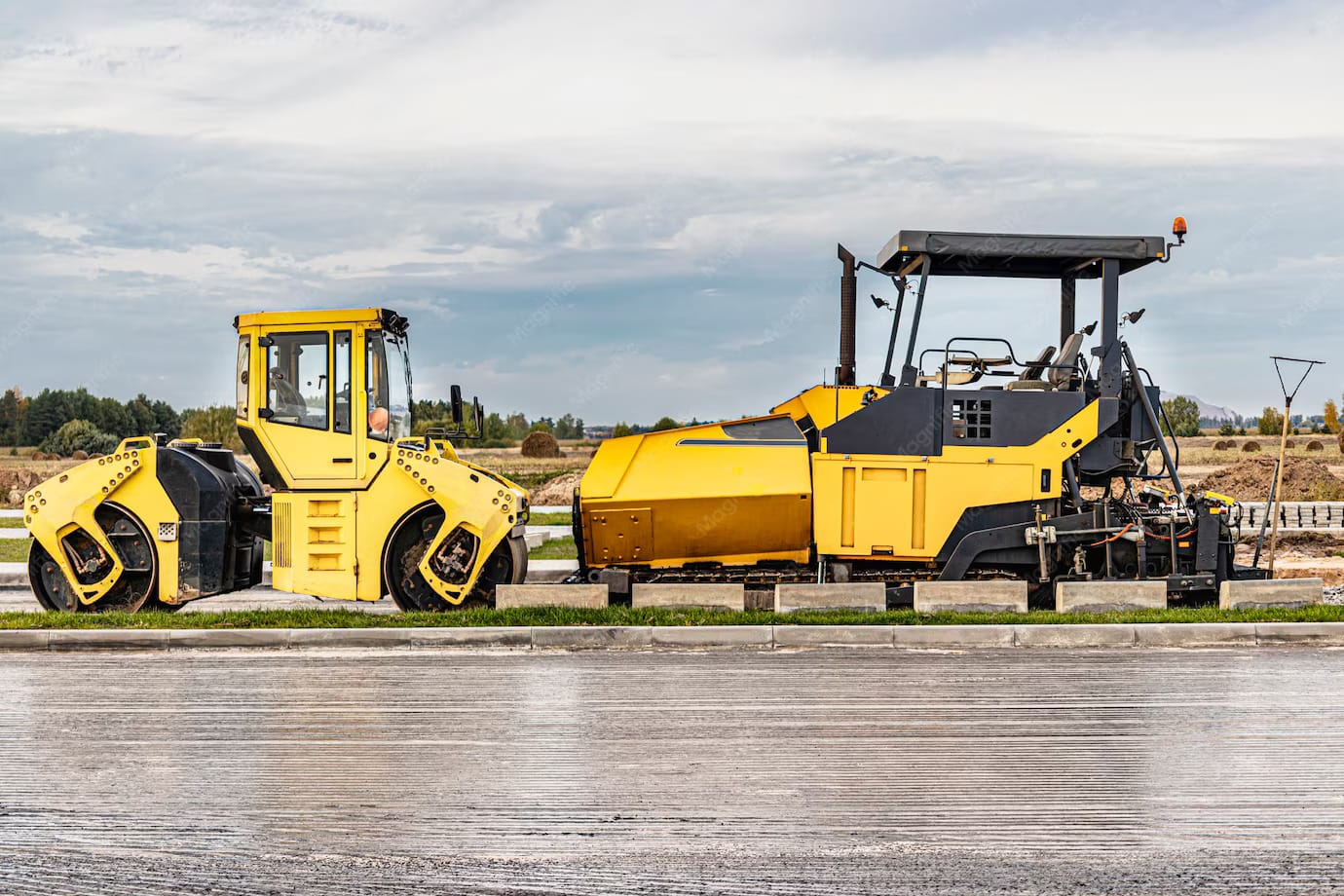
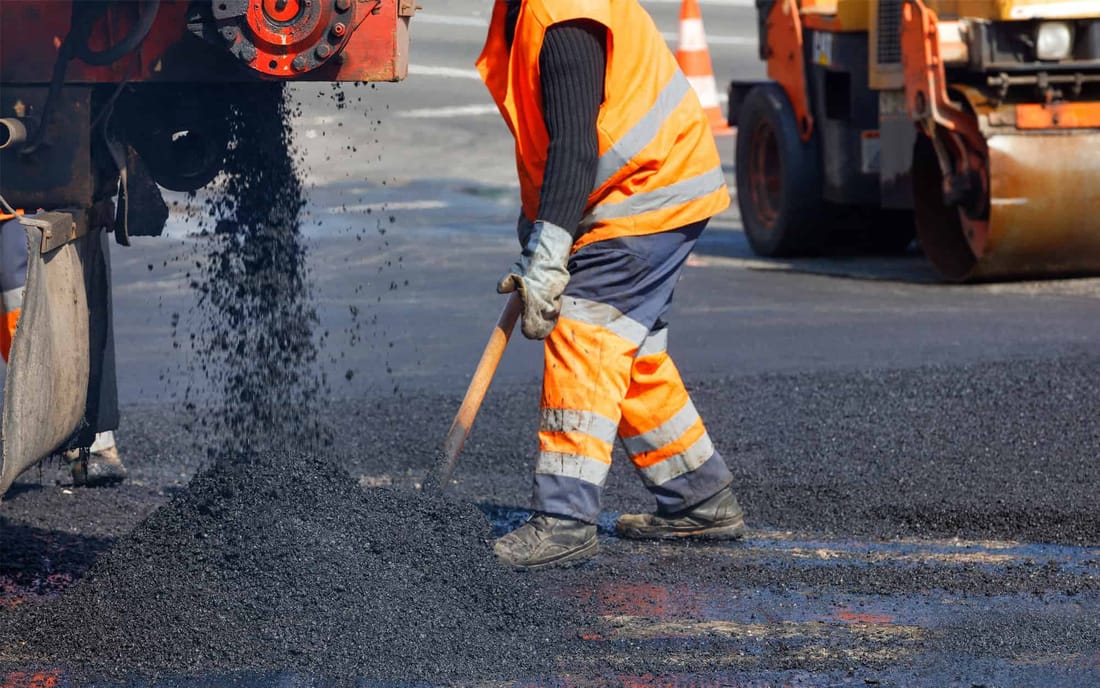
4. Paving in multiple lifts: Industrial asphalt is placed in at least two lifts, often three. Each lift is placed at the correct temperature, spread with a paver (not just a skid steer), and compacted with a coordinated rolling pattern to achieve density. We pay particular attention around dock doors, trench repairs, and manholes where irregular compaction is common.
5. Joints, striping, and re opening: Longitudinal and transverse joints are tacked properly so seams do not ravel. Once cooled, we stripe truck lanes, dock bay numbering, fire lanes, and pedestrian paths to suit your operations. Finally, we help you stage re opening so heavy trucks do not sit on hot pavement before it has gained strength.
What Drives Cost for Industrial Asphalt Paving in Austin
Cost for industrial asphalt paving in Austin is driven far more by structure and logistics than by the top surface alone. Precision Asphalt Austin explains these factors upfront so you can budget with fewer surprises.
Key cost drivers include:
• Section thickness and base type: Heavier duty designs with 10 inches of total section cost more than light duty lots, but cutting thickness to save money in truck lanes almost always leads to early failures and more expensive reconstruction later.
• Access and phasing: Active facilities off Burleson Road, Ben White, or within business parks often require night work, weekend shifts, or multi phase construction so your operations can continue. This adds mobilizations and traffic control but protects your business.
• Drainage corrections: Regrading, new inlets, or underdrains add cost, yet in many older Austin industrial parks poor drainage is the primary reason the existing pavement failed. Fixing it when you repave usually pays for itself in extended pavement life.
• Tie ins and repairs: Matching elevations at docks, existing concrete slabs, rail spurs, and utility covers takes time and detail work. This is especially true in older facilities where past repairs were done in patches using mixed materials.
We provide detailed proposals that separate these components so you can clearly see how design decisions affect both cost and performance.
Common Industrial Pavement Problems and How We Prevent Them
Industrial sites across Austin share a few predictable pavement problems. Precision Asphalt Austin designs and builds your project to avoid repeating the same failures you might already be dealing with.
Rutting and shoving in truck lanes: This comes from mixes that are too soft for high temperatures or from insufficient thickness over weak subgrade. We use stiffer binder mixes, adequate section thickness, and strict compaction practices to resist deep wheel tracks.
Alligator cracking around docks and dumpsters: These areas see concentrated loads and are often under designed. We thicken pavement near dock doors, trash enclosures, and compactor pads, and sometimes recommend reinforced concrete in extremely high stress spots with asphalt tying in around it.
Drainage related failure: Water entering through surface cracks or sitting at the edge of the pavement weakens the base. We seal joints and edges, plan positive drainage away from the pavement, and recommend periodic crack sealing before small issues turn into structural failures.
Reflective cracking along old joints and utility trenches: Where we must pave over existing cuts or mismatched subgrades, we detail transitions with fabric interlayers, staggered joints, or localized reconstruction to reduce the chance of cracks reflecting quickly to the surface.
Planning, Scheduling, and Working Around Your Operations
Industrial and heavy duty asphalt projects must be built around your production or logistics schedule. Precision Asphalt Austin spends as much time planning traffic control and phasing as we do on mix designs, because downtime has a direct cost for your business.
For warehouses and logistics centers, we often phase work so that only a portion of dock doors or truck lanes are offline at any time. Night or weekend paving is available to minimize conflicts with receiving and shipping. For manufacturing facilities where plant shutdowns are rare, we design temporary drive routes and staging areas to keep raw materials and finished goods moving.
We coordinate with your safety and facilities teams on pedestrian paths, emergency access, and signage while work is in progress. For sites near busy Austin corridors, like along I 35 or SH 130, we also account for city or county requirements for lane closures at street tie ins.
Before we start, you receive a clear schedule, phasing plan, and contact information for the site superintendent. During construction you get daily updates on progress and upcoming closures so you can keep drivers, tenants, and staff informed.