Home › Asphalt Striping and Pavement Markings
Precision Asphalt Austin provides professional asphalt striping in Austin, TX so your parking lot is safe, compliant, and easy to navigate. We handle layout, stall lines, directional arrows, fire lanes, and ADA markings. Fresh pavement markings improve curb appeal and help maximize parking capacity on your property.
Precision Asphalt Austin provides professional asphalt striping throughout Austin, TX, Texas and the surrounding area. Our licensed, insured crew delivers safe, clean, on-time work with a free estimate before anything begins. Call (737) 530-7711 or request your free quote.
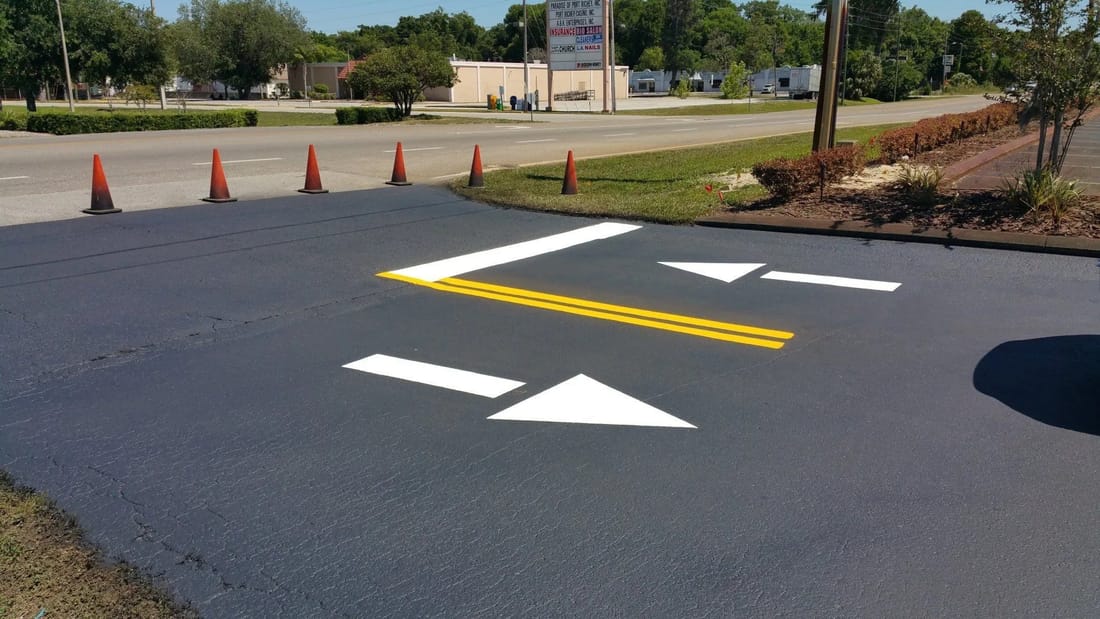
Asphalt Striping for Austin Properties
Clear, durable striping is what makes your asphalt actually work for drivers and pedestrians. Precision Asphalt Austin provides asphalt striping and pavement markings for retail centers, medical offices, tech campuses, churches, HOAs, and small business lots across Austin, from older properties near Hyde Park to newer developments around Circle C and the Domain.
We do far more than “repaint lines.” Every project starts with a site walk, measurements, and a layout review so your lot meets current City of Austin and ADA requirements. We address traffic flow, pinch points near drive‑thrus, fire lane access for Austin Fire Department standards, and safe pedestrian paths from parking to the building. Our crews arrive with plans in hand, not guesswork, so your striping lines up, your stalls are consistent, and your lot is easy to navigate during the busiest hours.
Our Step‑by‑Step Striping Process
When you schedule asphalt striping with Precision Asphalt Austin, you get a defined process that keeps your property usable and minimizes downtime.
1) Evaluation and layout: We confirm stall counts, loading zones, ADA spaces, van‑accessible spots, and any special requirements like EV charging or curbside pickup stalls. For older central Austin lots that have been re‑striped many times, we often recommend rationalizing the layout to eliminate confusing “ghost” patterns.
2) Surface preparation: Good striping fails early on dirty pavement. We use power blowers, wire brooms, and in heavy debris areas mechanical sweepers to remove dust, gravel, and organic material. In oil‑soaked or high‑traffic areas, we pre‑treat with a detergent or primer to improve paint adhesion.
3) Layout and chalk lining: Using tapes, chalk lines, and laser guides, we snap centerlines for rows, then mark stalls, arrows, and symbols. This layout step is what keeps lines straight and stall sizes consistent across the entire lot.
4) Application: We use commercial striping machines with adjustable tips to control line width and thickness. Paint is applied in a controlled, continuous pass so lines are crisp with clean start and stop points. For ADA symbols, crosswalks, and custom logos, we use stencils and detail guns for sharp edges.
5) Inspection and touch‑ups: Before we pull cones, the crew lead walks the entire lot, checks line thickness, spacing, and symbol clarity, and makes touch‑ups so you do not find problems after reopening.
6) Reopening: We post realistic cure times based on the product used and temperature. In Austin heat, standard traffic paint can often be driven on in 30–60 minutes, while high‑build or thermoplastic markings may require a longer set time.
Materials and Marking Options That Hold Up in Central Texas
Austin’s combination of intense UV, high pavement temperatures, and occasional freezes is tough on paint. Precision Asphalt Austin matches materials to your property’s usage and budget so markings stay visible as long as possible.
Standard waterborne traffic paint: Best for lower to moderate traffic lots, small businesses, and multifamily properties. It is cost‑effective and quick to dry, which is useful when you need to keep a tight schedule on busy retail centers.
High‑build or chlorinated rubber‑based coatings: Thicker, more durable coatings for high‑turnover parking lots such as grocery stores, big box retail along Research Blvd, or hospital campuses. These resist hot‑tire pickup and fading from long summer sun exposure.
Thermoplastic markings: Used selectively on drive lanes, stop bars, and crosswalks that see constant traffic or frequent braking. Thermoplastic is applied hot and bonds to the asphalt surface, creating thick, highly reflective markings that significantly outlast standard paint.
Reflective glass beads: For lots that see night traffic or truck ingress, we can broadcast glass beads into wet paint or thermoplastic, giving better visibility during rain and low‑light conditions. This is common around industrial yards in east Austin and facilities that operate 24/7.
Color and specialty coatings: For fire lanes, we often recommend red background striping where code allows. EV charging spaces may use green fields with white or blue symbols. We also provide hash zones, loading hatching, speed humps markings, and bike lane striping where needed.
Designing Efficient, Code‑Compliant Parking Layouts
Many Austin properties were built before current accessibility and fire code standards, so simply tracing old lines can leave you out of compliance. Precision Asphalt Austin helps you adjust your layout while still maximizing space.
We verify stall widths and counts based on your use (compact vs standard vs accessible), and we pay particular attention to:
• ADA compliance: Correct number of accessible spaces, van‑accessible stall placement, access aisles, signage locations, and proper blue striping and symbol sizes based on current federal and Texas standards.
• Fire lanes and no‑parking zones: Marking continuous red or yellow curbs, wording such as “FIRE LANE NO PARKING,” and clear access to hydrants and FDCs in line with local requirements, especially important for strip centers and multifamily complexes.
• Traffic patterns: Correct placement and orientation of arrows, yield bars, and stop bars to reduce conflicts at busy entrances and drive‑thru exits. In tight West Campus or downtown lots, we often add one‑way designations and high‑visibility stop bars to keep vehicles flowing.
• Pedestrian safety: Marked crosswalks from main parking fields to entrances, especially where there is a mix of vehicle and foot traffic, like schools, churches, and medical offices.
Our goal is to give you a lot that looks organized and professional, but also reduces fender‑benders and confusion that can cost you time and liability.
What Affects Asphalt Striping Cost in Austin
Two properties with similar square footage can have very different striping costs. When Precision Asphalt Austin builds a proposal, we break down the major cost drivers so you understand what you are paying for.
Scope and layout complexity: A simple restripe of an existing layout with clear lines is less expensive than a full re‑layout, new markings on fresh asphalt, or a lot with extensive stenciling, arrows, loading hatches, and custom text.
Existing condition: If there are multiple layers of old paint, heavy oil spots, or poorly placed markings that must be blacked out before new striping, labor and material increase. In many older Austin lots near Lamar or South Congress, we often need to seal or block old layouts to avoid confusion.
Material selection: Standard traffic paint is the least expensive. Upgrades such as high‑build coatings, thermoplastic, and glass beads add cost but extend performance, often making them more economical over several years in high‑traffic areas.
Scheduling and phasing: Working at night or in multiple phases so your business can remain open may cost a bit more due to crew hours and mobilization. However, it can prevent lost revenue for busy retailers and restaurants.
Coordination with sealcoating or paving: Striping directly after sealcoating or new asphalt paving is most efficient. If we need to mobilize separately for small touch‑up areas, unit costs can be higher. We help you plan the sequence so you only pay for mobilization once when possible.
Common Striping Problems in Austin and How We Prevent Them
Local conditions create predictable striping failures. Precision Asphalt Austin has adjusted our methods over years of working in Central Texas so you get better, longer‑lasting markings.
Hot‑tire pickup: On fresh sealcoat or new asphalt during Austin’s 100‑degree days, paint can stick to hot tires and peel. We address this by using the right curing window, adjusting paint type, and posting realistic reopen times so you are not forced to drive on lines too soon.
Premature fading from UV: We specify coatings with UV‑resistant pigments and correct film thickness. Thin applications save paint cost but fade faster. Our standard approach favors coverage and longevity over shaving a few dollars on material.
Misaligned or uneven stalls: Old lots with multiple past layouts often look crooked. We take the time to re‑establish baselines and control points, then snap grid lines so the entire field is straight, even if the building or curb lines are not perfect.
Standing water: If your lot has dips, paint in those puddles fails early. During layout, we note ponding areas and, if possible, recommend minor patching or leveling. Where that is not in scope, we alter placement of key markings like crosswalks so they are not constantly submerged.
Confusing re‑striping over old markings: Instead of simply painting over everything, we black out obsolete markings with blackout paint or patching, then apply the new layout so drivers see one clear set of instructions.
Scheduling, Access, and Working Around Your Austin Business
Effective asphalt striping in a busy city requires tight logistics. Precision Asphalt Austin plans projects so your customers, residents, or tenants can keep moving while we work.
For retail centers and restaurants, we often schedule overnight or early‑morning work, doing the lot in sections so key entrances remain open. For multifamily complexes, we coordinate with management so residents receive notice about which sections will be closed and when, and we phase work so residents always have alternative parking.
Churches, schools, and medical facilities have specific schedule windows, such as weekdays for churches or school breaks and weekends for campuses. We build the striping plan around those windows, including contingency time in case of a rain delay.
Before we start, you receive a simple plan showing closure areas, sequence of work, and estimated reopening times. During the project, our crew sets out cones, barricades, and “wet paint” signage, and we remain on site until the area is safe to reopen.
When the work is finished, we walk the site with you or your designated representative, explain cure times, review any changes from the old layout, and discuss a realistic timeline for your next restripe based on your traffic volume and the materials chosen.